A Longevity Diet Built for Korean Plates, Not Mediterranean Ones
By ELESSAR
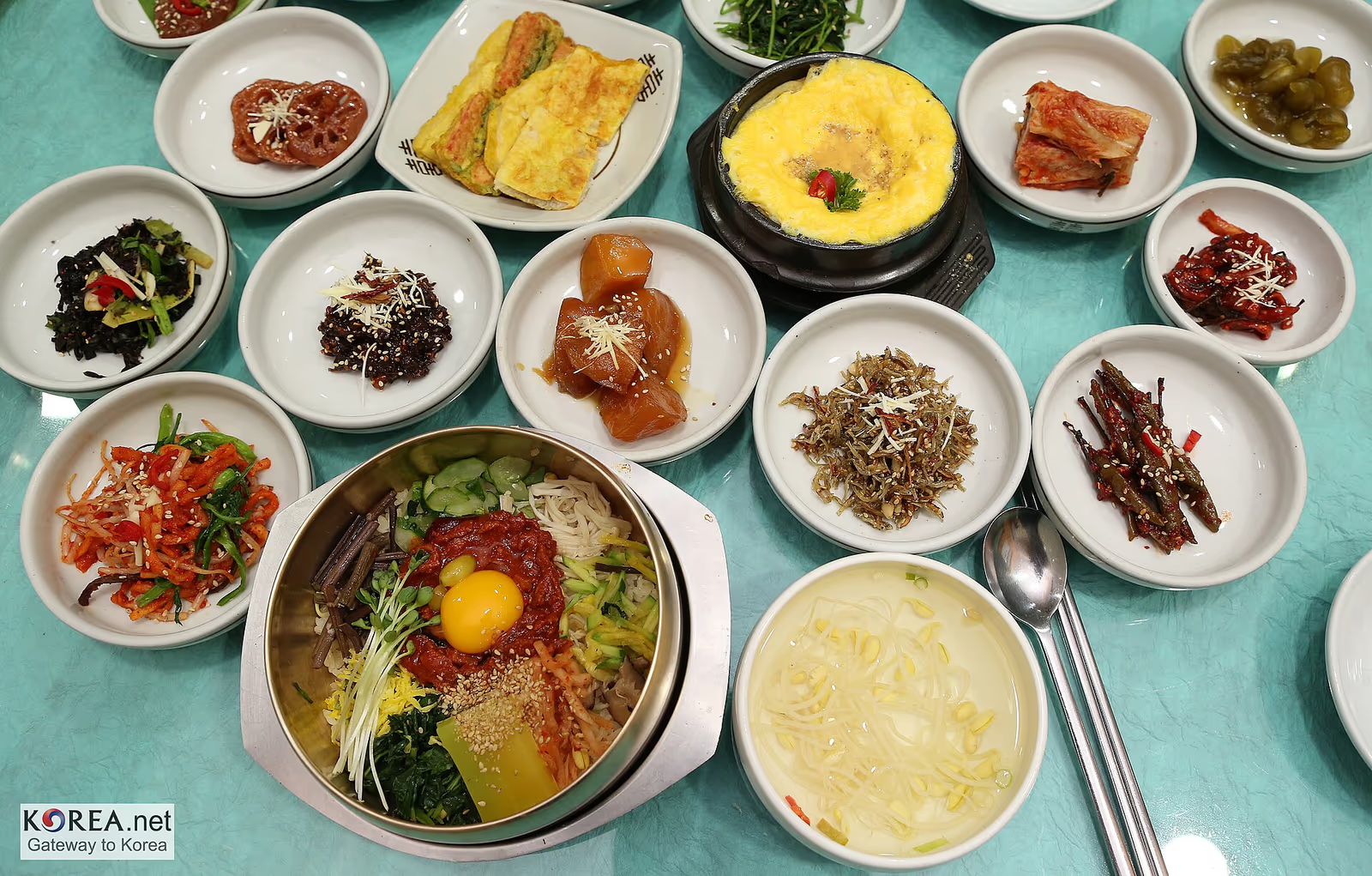

A Longevity Diet Built for Korean Plates, Not Mediterranean Ones
The Mediterranean diet gets most of the attention, but it was built around olive oil, fish and the food culture of a coastline far from Seoul. A new paper asks a quieter question: what would a diet designed for healthy aging look like if it started from Korean plates instead?
Living longer is no longer the whole goal. As people across the world reach older ages, the harder question is how many of those years are spent in good health, with a working memory, steady muscles and a heart that keeps pace. Diet sits close to the center of that question, and several eating patterns have earned scientific respect for their links to better health: the Mediterranean diet, the DASH diet built to lower blood pressure, the MIND diet aimed at protecting the aging brain, and the EAT-Lancet reference diet designed with both human and planetary health in mind.
The trouble is that these patterns were shaped elsewhere. A diet rich in olive oil, wine, whole grains and legumes maps neatly onto southern Europe, but it does not translate cleanly to a country where rice, fermented vegetables, tofu and seafood carry the meal. Researchers writing in Clinical Nutrition Research set out to close that gap, developing what they call a longevity diet framework adapted for South Korean adults.
This is a narrative review paired with a design exercise, not a clinical trial. The authors did not feed anyone anything or track health outcomes over time. Instead they read across the major dietary models and clinical nutrition guidelines, pulled out the components that repeatedly show up as beneficial, and reassembled them into a structured set of recommendations tuned to how Koreans actually eat. It is best understood as an expert synthesis of existing evidence, translated into practical criteria, rather than a discovery of new facts.
One of the more concrete moves was arithmetic. The EAT-Lancet reference diet is calibrated to 2,400 calories a day. The authors scaled it down to 2,000 calories to better match the energy needs of South Korean adults, a small adjustment that signals the larger intent of the project: take a global template and fit it to a specific population rather than assume one size serves all.
The resulting framework is organized around six areas of health that matter as people age. It addresses weight management, blood sugar control, cardiovascular health, cognitive function, muscle function and skin health. For each, the authors draw on the same underlying nutritional logic and express it as targets a dietitian or a motivated reader could work with.
At the level of daily calories, the framework proposes that 50 to 65 percent come from carbohydrates, 10 to 20 percent from protein, and 15 to 30 percent from fat. Those ranges are broad on purpose, sitting within conventional nutrition guidance rather than pushing an extreme. More distinctive is the recommendation on protein: a one-to-one ratio of animal to plant protein. That balance nudges the diet toward beans, tofu and other plant sources without asking people to abandon fish, eggs or meat, and it reflects a growing body of evidence that where protein comes from, not just how much, shapes long-term health.
The food-group advice reads as a familiar refrain, which is part of the point. The framework leans on whole grains, dietary fiber, plant-based proteins and unsaturated fats, and it pulls back on refined carbohydrates, added sugars and saturated fats. What makes it worth attention is not novelty but fit. The recommendations were tailored to South Korean dietary patterns, so the advice arrives in a form that matches the meals people already recognize, rather than importing ingredients and habits from a different cuisine.
Set against what was already known, the contribution here is one of translation. The evidence that fiber-rich, plant-forward eating tracks with better cardiovascular and metabolic health did not begin with this paper, and the authors do not claim otherwise. Their argument is that the benefits observed in largely Western study populations cannot be assumed to carry over intact, given real differences in staple foods, cooking methods and cultural practice, and that a framework grounded in the local diet is more likely to be usable.
What the paper does not do is equally important. It does not test whether people who follow this framework actually age more healthily, live longer, or develop fewer diseases. Because it is a synthesis rather than an experiment, it cannot establish that the diet causes any particular outcome. The health domains it targets, from muscle to memory to skin, are supported by the general nutritional literature the authors reviewed, not by a study that tracked Korean adults eating this specific pattern. Whether the framework delivers on its promise is a question for future trials, which the paper itself frames as the next step.
For a reader outside Korea, the value lies less in the exact percentages than in the approach. Dietary advice is often exported as though nutrition were culturally neutral, when in practice the diets people can sustain are the ones that fit their kitchens, markets and traditions. A framework that starts from local food and then applies the evidence, rather than the reverse, is a model other populations could borrow. The principles at its core, more fiber and whole grains, a lean toward plant protein, less sugar and less saturated fat, are consistent enough across the world's respected dietary patterns that they are unlikely to steer anyone wrong. What this work adds is a careful attempt to make them stick.
Sources
- Toward a longevity diet framework: integrating global evidence for healthy aging in the South Korean population.Jung S, Kang HJ, Choi M, Park YK · 2026 · Clinical nutrition researchDOI 10.7762/cnr.2026.0015PMID 42136403